
Reintroduction of pine martens to the Forest of Dean and lower Wye Valley
This site is not the final version and is currently being tested. Any projects, sites and species data added to the site should be for testing only and will be wiped before the final version is released.
- Monitoring points:
- Species observations:
Test project
Project summary
The recovering population of pine martens in Scotland is currently the most suitable source of animals for translocations elsewhere in mainland Britain. However, there are still relatively few areas where pine martens have been established for a sufficiently long time and are at high enough densities to be able to sustain the removal of a limited number of animals for translocations. Translocations of pine martens have already taken place into the largest contiguous region of highly suitable habitat in mid Wales. A reintroduction is also underway into the Wye valley on the England/Wales border and Forest of Dean.
Overall aim
Reintroduction of the species at the Forest of Dean and lower Wye Valley. Reestablishment of populations;
Name of species translocated
Martes martes
How many species?
1
Monitoring form type
Translocation generic records
Project timeline
Forest of Dean:
Between 2019 and 2021, following feasibility studies, 35 pine martens were successfully reintroduced into the Forest of Dean to bolster the expanding Welsh population and help establish a resilient pine marten population in the south-west of England. No further translocations will be undertaken in Gloucestershire and this recovering population will be monitored as it continues to expand and spread throughout the region. As of 2022, the population is thought to be just over 40 animals, with at least 4 litters of kits being born so far.
lower Wye Valley:
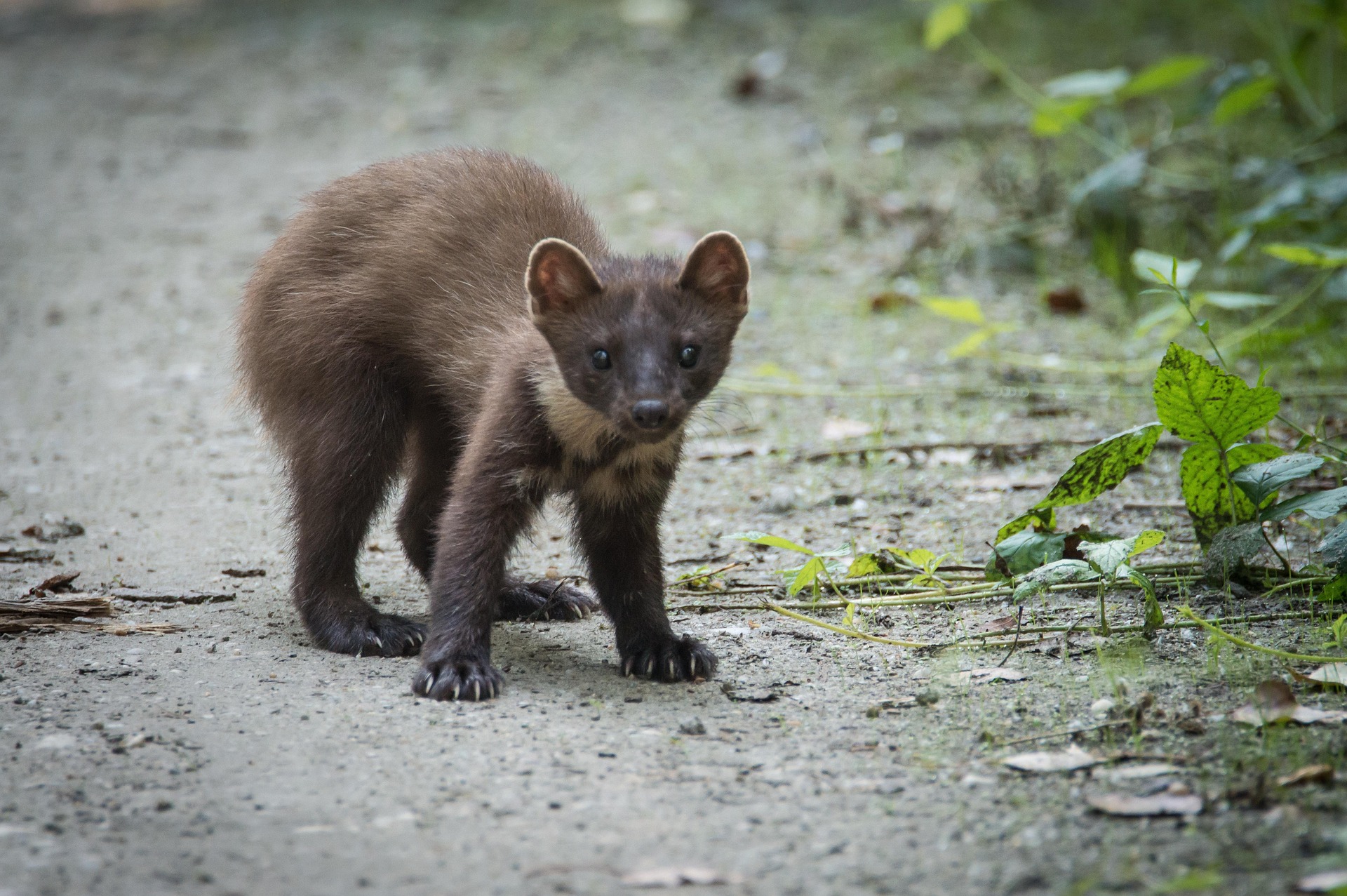
In total, 55 records of Pine Martens, primarily in the form of camera trap videos/images, scats and hair samples, were collected from Northumberland and Cumbria, between 2017 and 2020 (see images 1, 4, 8). Prior to the project, there had been only two verified records of Pine Martens in Northumberland and Cumbria documented between 2000 and 2016, so the recording efforts of this project have markedly improved our knowledge of Pine Marten distribution and range expansion in northern England. Monitoring of Pine Martens will be continued by volunteers, and Pine Marten records will also be collected by other organisations and groups doing survey work in the project area (e.g. for red squirrels and goshawks). A total of 74 volunteers have carried out Pine Marten surveying and monitoring activities, resulting in 504 days of volunteer time being contributed.
Between 2019 and 2021, following feasibility studies, 35 pine martens were successfully reintroduced into the Forest of Dean to bolster the expanding Welsh population and help establish a resilient pine marten population in the south-west of England. No further translocations will be undertaken in Gloucestershire and this recovering population will be monitored as it continues to expand and spread throughout the region. As of 2022, the population is thought to be just over 40 animals, with at least 4 litters of kits being born so far.
lower Wye Valley:
In total, 55 records of Pine Martens, primarily in the form of camera trap videos/images, scats and hair samples, were collected from Northumberland and Cumbria, between 2017 and 2020 (see images 1, 4, 8). Prior to the project, there had been only two verified records of Pine Martens in Northumberland and Cumbria documented between 2000 and 2016, so the recording efforts of this project have markedly improved our knowledge of Pine Marten distribution and range expansion in northern England. Monitoring of Pine Martens will be continued by volunteers, and Pine Marten records will also be collected by other organisations and groups doing survey work in the project area (e.g. for red squirrels and goshawks). A total of 74 volunteers have carried out Pine Marten surveying and monitoring activities, resulting in 504 days of volunteer time being contributed.
Project team - organisational or group members
Jenny MacPherson and Patrick Wright
In collaboration with Gloucestershire Wildlife Trust, Forestry England, Forest Research, Vincent Wildlife Trust, Back from the Brink and support of Forest Holidays and the Woodland Trust.
In collaboration with Gloucestershire Wildlife Trust, Forestry England, Forest Research, Vincent Wildlife Trust, Back from the Brink and support of Forest Holidays and the Woodland Trust.
Translocation aims
Species recovery (restoration to all or part of a species’ range)
Country
England
Region or locality
Forest of Dean and lower Wye Valley
How many release sites?
2
Images
Species
Species benefits
Improved national status of species
Increased numbers of populations
Increased numbers of individuals in the wild
Scientific benefits
Improve translocation practice
Biological risk assessment
Distance of the translocation