
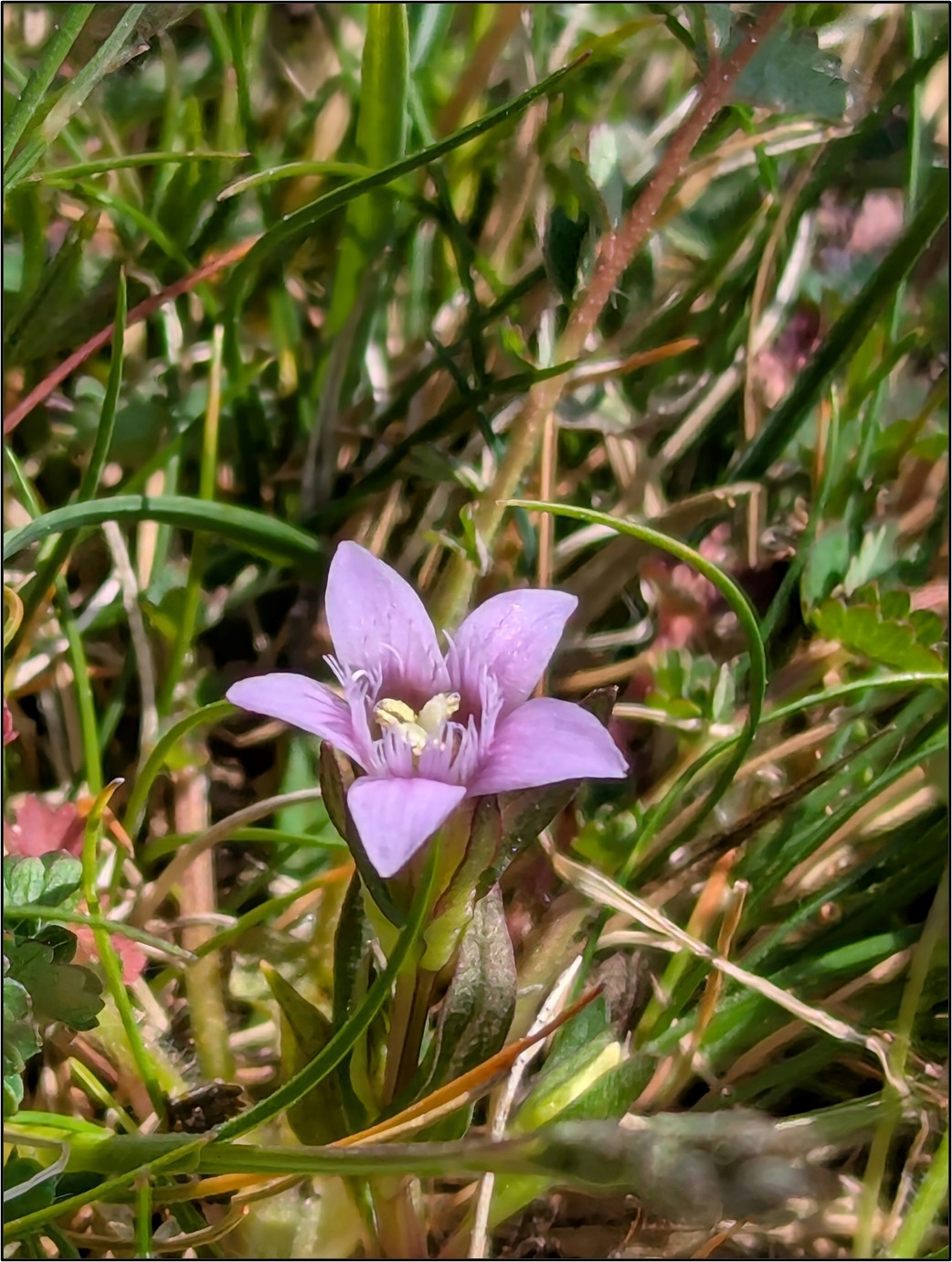
Early gentian (Gentianella amarella anglica) Facilitated Range Shift
This site is not the final version and is currently being tested. Any projects, sites and species data added to the site should be for testing only and will be wiped before the final version is released.
- Monitoring points:
- Species observations:
Project added by
HRichards
Test project
This is a test project - information shown may not be correct.
Project summary
As stated, G. a. anglica is threatened by climate (drought) in its current range - and is unlikely to be able to migrate to mitigate climate effects, due to its limited dispersal capacities and the highly fragmented nature of calcareous grassland in the UK.
Under current climate change pathways, new populations of G. a. anglica will need to be established outside of its current range to generate favourable condition for the species. This is a Priority for UK plant conservation, given the taxon's endemic status.
The specific introduction site has been identified through standardised site selection processes. The FRS introduction will be experimental (e.g. introductions to areas of varying micro- and mesohabitat, transplant propagules originating from wild vs ex situ cultivation). Data will be collected on how these and other variables influence success, informing future G. a. anglica FRS efforts.
Under current climate change pathways, new populations of G. a. anglica will need to be established outside of its current range to generate favourable condition for the species. This is a Priority for UK plant conservation, given the taxon's endemic status.
The specific introduction site has been identified through standardised site selection processes. The FRS introduction will be experimental (e.g. introductions to areas of varying micro- and mesohabitat, transplant propagules originating from wild vs ex situ cultivation). Data will be collected on how these and other variables influence success, informing future G. a. anglica FRS efforts.
Overall aim
Early gentian (Gentianella amarella anglica) is restricted in range to a handful of sites in the south of England, and is threatened at these sites by climate change - especially droughts. A facilitated range shift (FRS) is being conducted to establish a new population of G. a. anglica in the Lincolnshire Wolds, alleviating these threats.
Name of species translocated
Gentianella amarella anglica
How many species?
1
Monitoring form type
Translocation plant records
Project timeline
15 years
Funding body
NERC
Project lead
Rob Fitt, Sarah Dalrymple, Danni Hinchcliffe, Hugh Richards
Translocation aims
Pre-empting species’ decline/promoting species continued favourable status
Pro-active expansion of range
Mitigation
Outcomes
Outcome
Successful reproduction outside of the native range
Degree to which outcome was delivered at project end
fully delivered
Outcome
Positive population growth rate of all established populations
Degree to which outcome was delivered at project end
partially delivered
Outcome
Non-declining reproductive fitness (seed set, N seeds)
Degree to which outcome was delivered at project end
partially delivered
Outcome
Positive VORTEX modelling (no extinction projected, introduced population exceeds MVP)
Degree to which outcome was delivered at project end
partially delivered
Outcome
Data collected allows refinement of FRS introduction strategy; identification of factors influencing above Outcome Metrics (propagule stage, propagule type, etc.)
Degree to which outcome was delivered at project end
fully delivered
Additional outcome details
None
Lessons learned
Microhabitat critical - but field data pre-introduction helped select optimal transplant locations.
Wild first-year plants outperform other propagule ages (e.g. seeds, biennial) and types (ex situ cultivated)
Wild first-year plants outperform other propagule ages (e.g. seeds, biennial) and types (ex situ cultivated)
Country
England
Region or locality
Single site.
How many release sites?
1
Were experts or guidance consulted prior to the translocation?
Advice sought from expert individuals
Consulted written guidance
Add further information on guidance sought
IUCN. Guidelines for Reintroductions and Other Conservation Translocations.
Natural England. Reintroductions and conservation translocations in England: code, guidance and forms.
Natural England. Reintroductions and conservation translocations in England: code, guidance and forms.
Documents
UKCTD_upload_TEST.pdf35.28 KB
Images
Species benefits
Improved national status of species
Improved international status of species
Improved demographic status within population
Increased numbers of populations
Increased numbers of individuals in the wild
Ecosystem benefits
Resource provision for pollinators
Resource provision for herbivores
Resource provision for seed eaters
Improved community diversity
Scientific benefits
Improve translocation practice
Understand the mechanism of successful and failed translocations
Increase understanding of focal species
Experimental framework to understand species responses more completely
Understand the potential for conservation intervention
Biological risk assessment
Distance of the translocation
Threat to the source population
Establishment may cause loss/reduction of important species
Translocation may spread pests and diseases
Hybridisation threat (intra-specific races or inter-specific)
Socioeconomic risk assessment
Insufficient resources may prevent successful implementation of the translocation plan
Major financial costs once the translocation has been completed (e.g. control measures if the translocation is 'too successful')